Navigating Global Trade: Strategies for Supply Chain Success
Updated: Apr 1
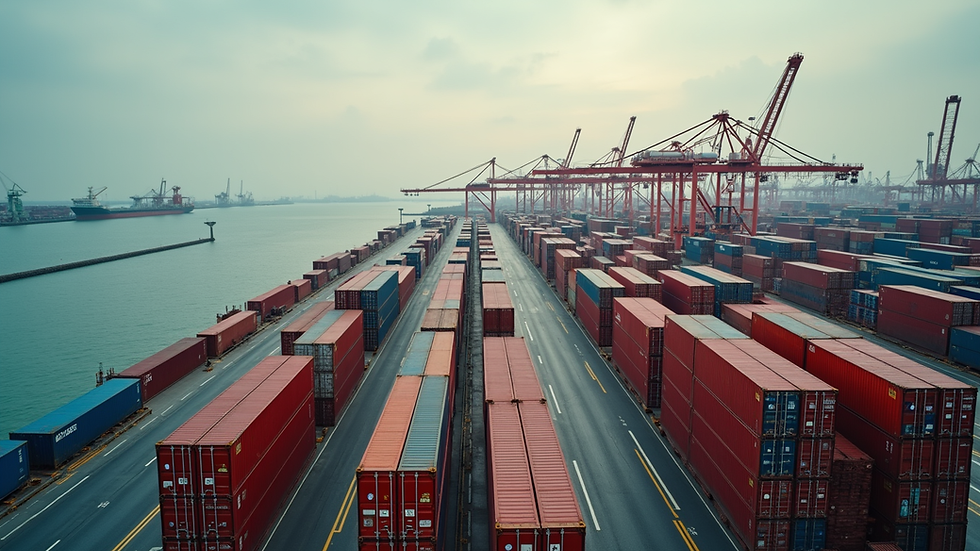
Global trade is no longer just an extension of business—it is the environment in which business operates. As companies expand across borders, supply chains become more complex, more exposed, and significantly more strategic. What once was a matter of moving goods has evolved into managing interconnected systems shaped by regulations, markets, and constant change.
Understanding how to navigate this complexity is not optional. It is what determines whether an operation grows or becomes vulnerable.
At its core, global trade is influenced by a combination of regulatory frameworks, economic conditions, and geopolitical dynamics. Trade agreements can redefine cost structures overnight. Regulatory requirements vary significantly from one country to another, directly impacting how goods move across borders. At the same time, cultural differences continue to play a critical role in negotiations, partnerships, and operational alignment.
In this environment, supply chain management becomes more than coordination—it becomes strategy.
A well-structured supply chain does not simply support the business; it defines its ability to compete. When properly managed, it reduces operational costs, improves responsiveness to market changes, and strengthens customer satisfaction through consistency and reliability. When mismanaged, it introduces inefficiencies that limit growth.
One of the most critical elements in achieving supply chain success is the strength of supplier relationships. Strong relationships are not built through transactions, but through consistency, communication, and trust. Companies that maintain open lines of communication and collaborate with their suppliers are better positioned to identify risks early and respond effectively when challenges arise.
Technology also plays a defining role in modern supply chains. Visibility is no longer a luxury—it is a requirement. Access to real-time data allows organizations to make faster decisions, anticipate disruptions, and maintain control over their operations. Whether through advanced management systems or data-driven insights, technology transforms supply chains from reactive systems into structured, controllable environments.
Another essential factor is diversification. Overdependence on a single supplier or region creates exposure that can compromise the entire operation. Companies that operate globally understand the importance of distributing risk across multiple sources and geographic locations. This approach does not eliminate disruption, but it significantly reduces its impact.
Inventory management is equally strategic. Balancing efficiency with resilience requires a clear understanding of demand patterns, supply timelines, and operational capacity. Whether through just-in-time models or maintaining safety stock, the goal is not simply to reduce inventory, but to align it with the realities of the supply chain.
At the same time, sustainability is becoming an integral part of global trade.
Businesses are increasingly expected to operate responsibly, not only to meet regulatory requirements, but to align with market expectations. Sustainable sourcing, waste reduction, and more efficient logistics are no longer optional initiatives—they are part of long-term positioning.
However, even with the right strategies in place, global trade continues to present challenges. Political instability, economic fluctuations, and logistical disruptions remain constant variables. The difference lies in how organizations prepare for them. Risk assessment, contingency planning, and continuous monitoring are no longer defensive measures—they are essential components of a resilient operation.
Looking ahead, global trade will continue to evolve. Digital transformation is reshaping how companies operate, increasing both efficiency and exposure. Regulatory environments are becoming more complex, particularly around sustainability and compliance. At the same time, emerging markets are redefining global dynamics, creating new opportunities for those prepared to navigate them.
In this context, success is not determined by the absence of challenges, but by the ability to operate within them.
Companies that approach global trade strategically do not focus solely on moving products—they focus on building systems that allow them to adapt, scale, and compete in a constantly changing environment.
Because in global trade, success is not about participation.
It is about positioning.


Comments